
The Silicon Fulcrum: Why One Island Controls Your Future
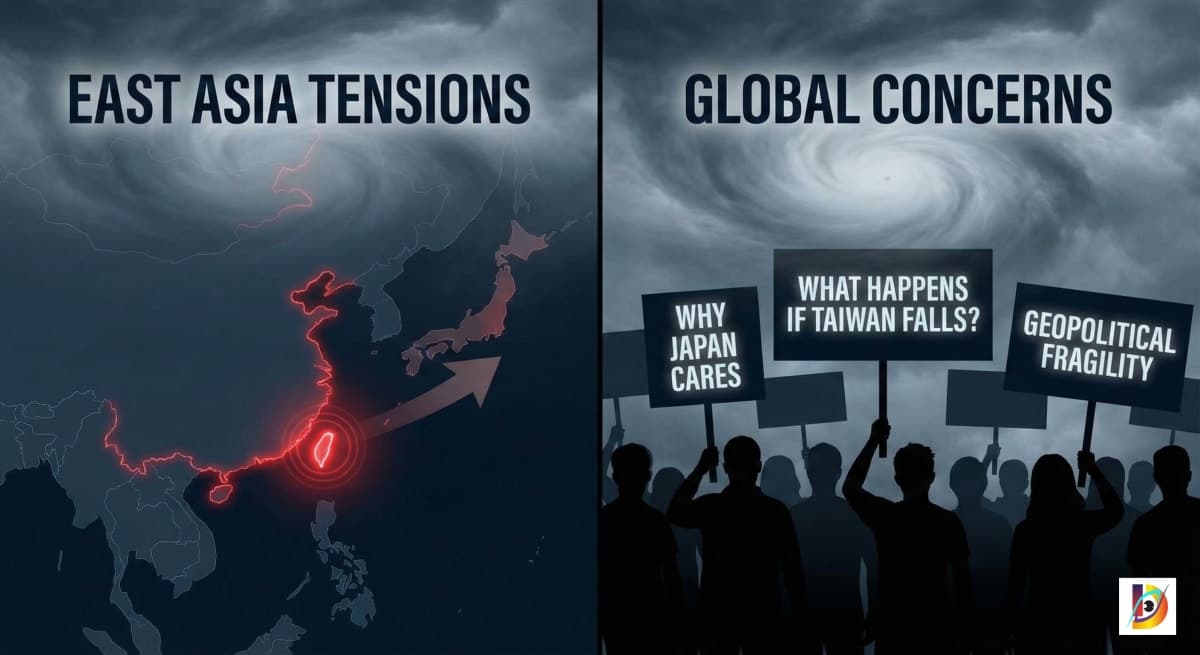
Everyone hears "China–Taiwan tension" on the news, but most people tune it out. It sounds like a regional political dispute—a leftover issue from the Cold War.
But here is the terrified truth: Your iPhone, your Tesla, your PlayStation 5, and the ChatGPT you use daily all depend on one company on one small island.
The status of Taiwan is no longer just about borders. It has evolved into the singular critical choke point for the global technological infrastructure. If Taiwan falls, the world’s technology falls with it.
1. A Short History: Why China Wants Taiwan
To understand the future, we have to quickly look at the past. The core of the tension lies in two fundamentally opposed views on who owns the island.
The PRC View: The People's Republic of China (PRC) holds the "One China principle," asserting there is only one China, and Taiwan is a part of it. President Xi Jinping has warned that unification "must and will" be achieved, explicitly reserving the option of military action.
The Taiwan View: The current government rejects forced unification, emphasizing Taiwan’s democratic identity.
The US Stance: The U.S. acknowledges China's position but doesn't explicitly endorse it, maintaining a "strategic ambiguity" to keep the peace.
Beijing uses this political dispute to squeeze Taiwan. But the real prize today isn't just territory—it's the keys to the future of AI.
2. The "Chip Bottleneck Crisis": Why We Can't Just Copy Taiwan
This is the heart of the issue. Taiwan isn’t just a participant in the tech industry; it is the engine.
Let's simplify the tech jargon:
Fabless (The Architects): Companies like Apple and Nvidia design chips, but they don't build them.
Foundry (The Builders): Companies like TSMC (Taiwan Semiconductor Manufacturing Company) actually manufacture the chips.
Nanometer (The Size): This refers to the transistor size. The smaller the number (e.g., 3-nanometer), the more powerful and advanced the chip.
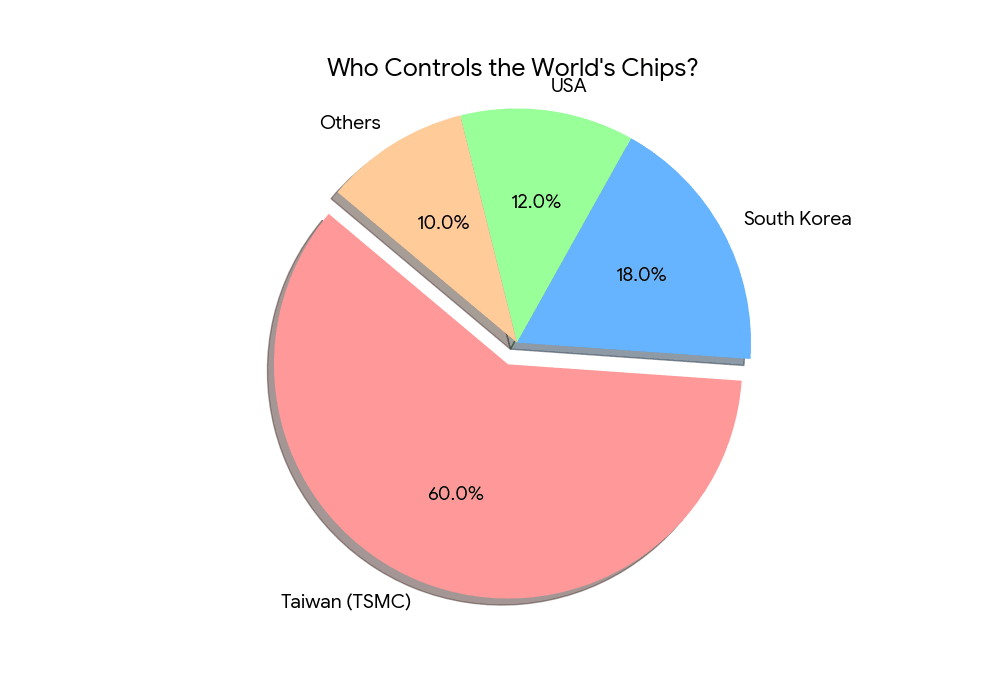
TSMC is the King: TSMC commands 65% of the global foundry market. But for the advanced AI chips (7-nanometer and smaller) that run the modern world, they hold an irreplaceable 90% market share.
Why can't the U.S. just build its own factories? Even with the new factories being built in Arizona, the U.S. cannot replace Taiwan’s ecosystem quickly.
The Ecosystem: Advanced chip making requires hundreds of specialized suppliers, all concentrated in Taiwan.
The Complexity: Machines like EUV lithography tools require thousands of calibration steps that Taiwanese engineers have perfected over decades.
The Timeline: Experts estimate rebuilding this ecosystem elsewhere would take 10–15 years, even with unlimited money.
Taiwan remains the global bottleneck. No country can detach quickly.
3. The "Global AI Gap": What Happens if China Wins?
The United States has blocked China from buying advanced AI chips to stop them from gaining military superiority. But if China takes over Taiwan, they don't need to buy chips from the U.S. anymore.
A PRC takeover would instantly grant Beijing control of the output—the world’s best chips and the institutional knowledge to refine them.
The Nightmare Scenario: If China gains control of Taiwan’s fabrication, they could:
Produce unlimited advanced chips for their own AI training.
Export fewer chips to Western competitors (or cut them off entirely).
Accelerate military AI systems at unprecedented speed.
This would negate years of U.S. policy and create a 10–20 year technological power shift overnight.
4. The "Allied Defense Triangle": Japan & The U.S.
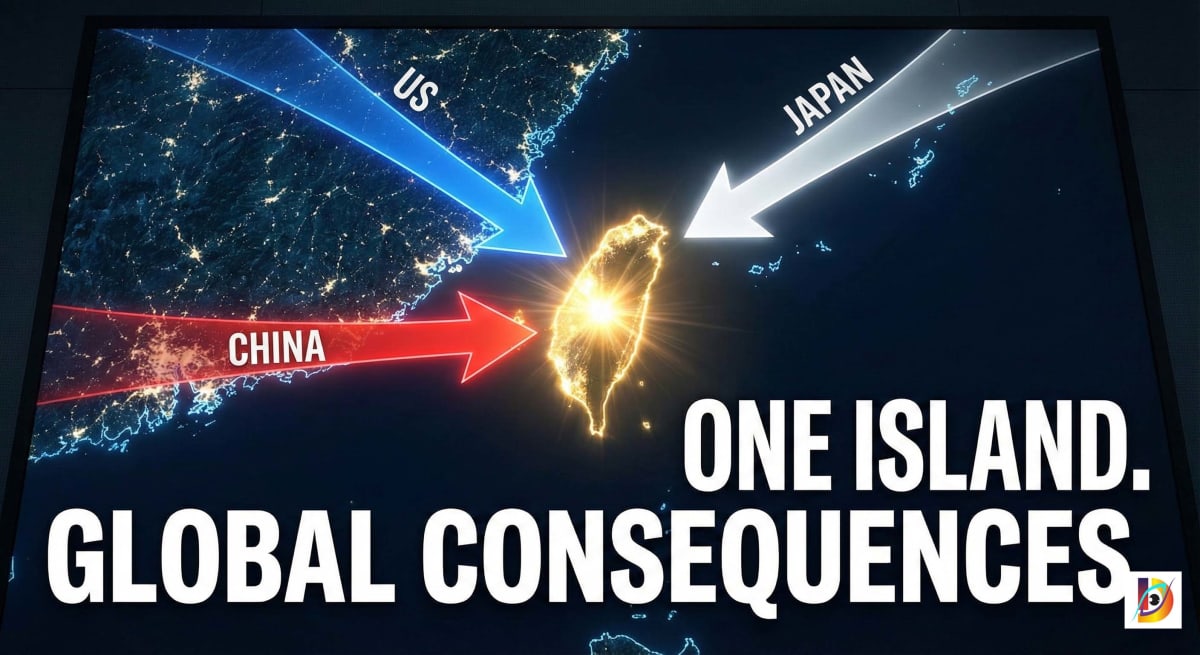
The defense of Taiwan relies on a quiet strategic triangle:
Taiwan provides the technology.
Japan provides the geography and logistics.
The U.S. provides the military deterrence.
If any leg collapses, China gains massive leverage in the Indo-Pacific.
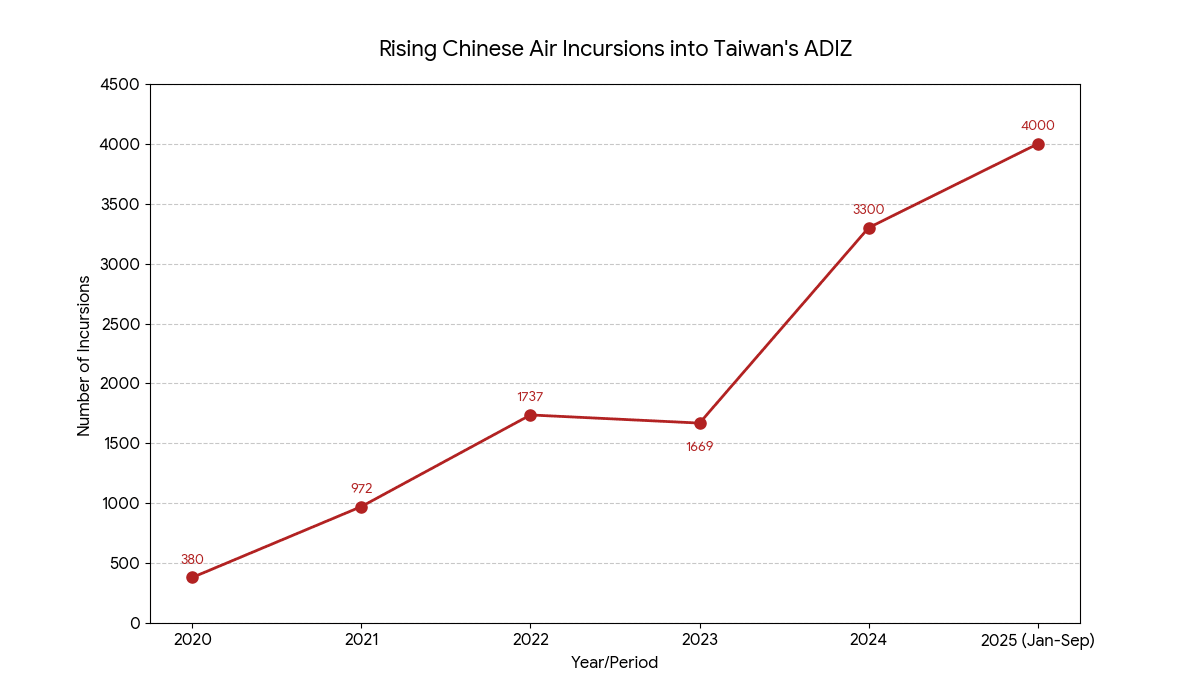
Japan’s Voice Against China
For decades, Japan avoided direct confrontation. That has changed.
The New Stance: Since 2022, Japanese officials have repeatedly stated that "Taiwan’s emergency is Japan’s emergency."
The Threat: Over 40% of Japan’s maritime trade passes right next to Taiwan. If China takes Taiwan, they can strangle Japan’s economy.
Public Opinion: Over 80% of the Japanese public now views China as a security threat. Japan is no longer silent—they are upgrading missile defenses and preparing for conflict.
Trump’s Visit to Japan: A Sign of Unity
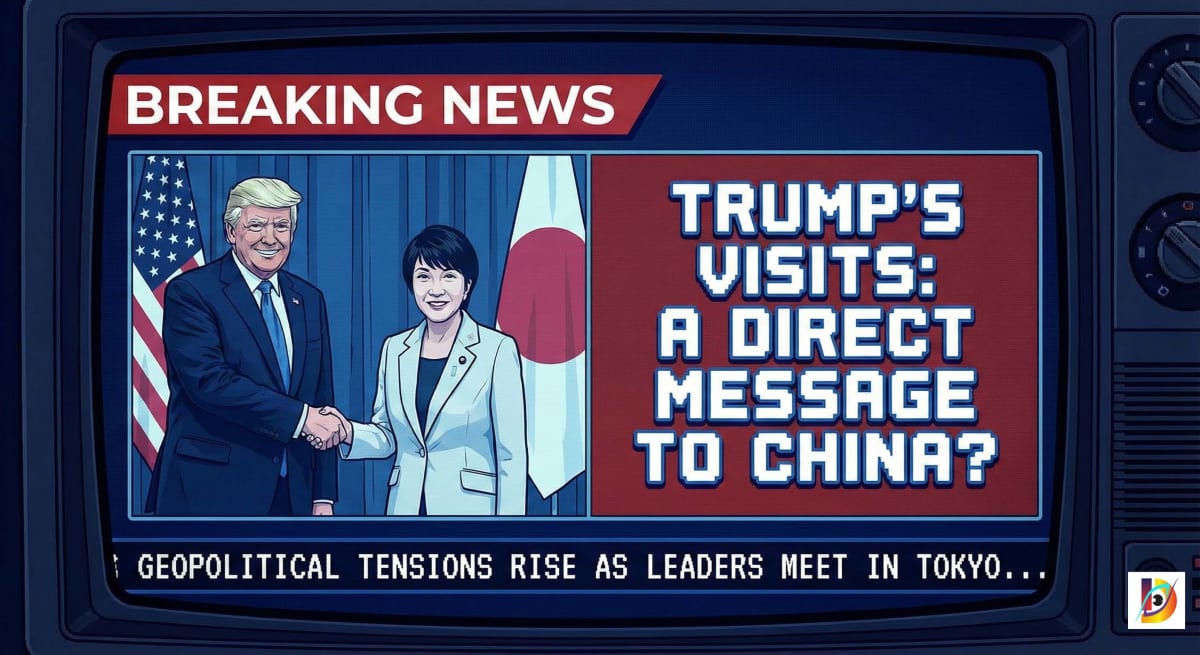
President Donald Trump’s recent visit to Japan signaled something critical. His meetings with Japanese leaders emphasized that containing China and protecting Taiwan is a bipartisan priority. The visit reinforced that regardless of who sits in the White House, the U.S. expects Japan to play a larger role in regional defense, solidifying the "Allied Triangle."
5. The Risk: China’s Ticking Clock
Why would China risk war now? Because their internal clock is ticking.
China is under growing pressure:
Demographic Crisis: Their population is shrinking.
Economic Strain: Youth unemployment is rising and local debt is high.
Nationalism: These struggles create a political incentive for Beijing to pursue a "nationalist victory"—like taking Taiwan—to boost domestic unity.
There is also the "Natural-Artificial Crisis." Taiwan sits on a major earthquake fault line. A massive natural disaster could damage the chip factories. China could use the chaos to intervene under the guise of "humanitarian aid," seizing the island without starting a full-scale war.
Conclusion: The Future is Decided Here
We are living through a race against time.
The U.S. and Europe are rushing to build "Silicon Shield 2.0"—diversifying supply chains to Arizona, Germany, and Japan. But these efforts are still years away from maturity.
Until then, the stability of the entire world rests on one small, democratic island.
History shows wars are fought over resources.
The next one may be fought over silicon — and Taiwan is the last source left.