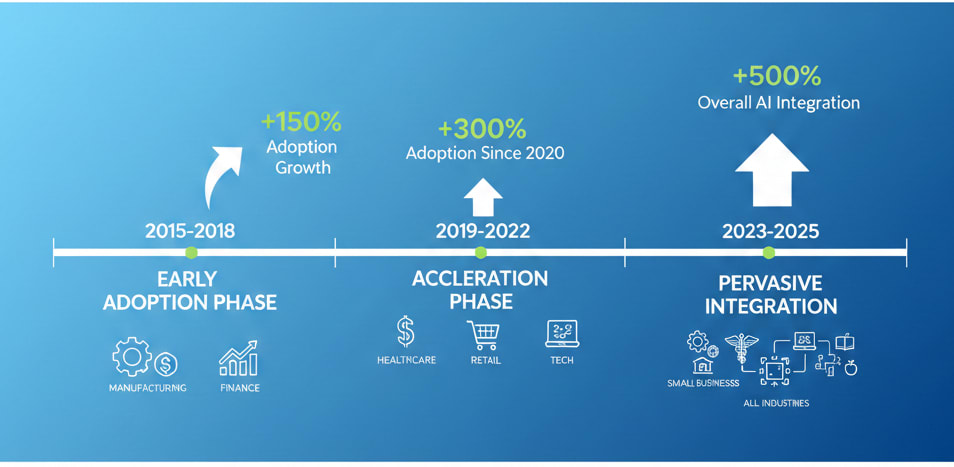
Artificial intelligence is changing industries in 2026 by automating repetitive work, analyzing massive amounts of data, and helping businesses make faster and smarter decisions. Once limited to large tech companies, AI is now used in factories, hospitals, schools, banks, and small businesses worldwide. From predicting machine failures to personalizing customer experiences, AI is no longer experimental—it has become a core part of modern business operations. Companies that understand how AI is transforming industries today are gaining a competitive advantage, while those that ignore it risk falling behind.
AI Is Now Part of Daily Work
Artificial Intelligence helps machines think and learn from data. It can do boring and repeated work, analyze large information, and help humans make better choices.
For example, in factories, AI can predict machine problems before they happen. This can reduce machine downtime by 40–50%. Because of this, companies can fix problems early instead of waiting for failures.
In 2026, AI is not a test tool anymore. It is now a basic part of modern business.
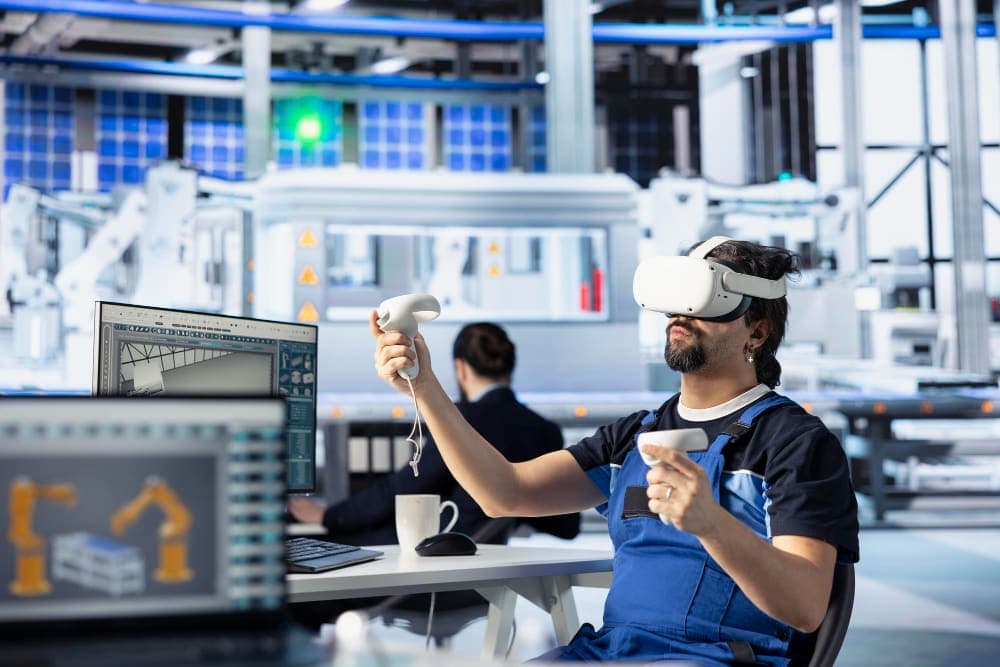
How AI Is Changing Manufacturing: Predictive Maintenance & Smart Factories
Factories were one of the first places to use AI. Today, AI helps factories work smoothly and avoid losses.
Predictive Maintenance (Fix Before Break)
Machines have sensors that send data to AI systems. AI studies this data and warns when a machine may break soon. This helps factories:
Avoid sudden shutdowns
Save repair costs
Use machines for a longer time
Quality Checking with AI
Cameras with AI check products on factory lines. They can find cracks, shape problems, or mistakes faster than humans. This reduces waste and improves product quality.
Better Stock and Demand Planning
AI studies sales data and market trends. It helps factories produce the right amount of products at the right time.
How AI Is Transforming Healthcare: Faster Diagnosis and Less Paperwork
AI does not replace doctors. It helps doctors do their job better.
Faster Disease Detection
AI checks X-rays, CT scans, and MRIs. It helps find diseases like cancer or heart problems earlier.
Personal Treatment Plans
AI studies a patient’s history and medical data. It suggests treatment plans that fit that specific patient.
Less Paperwork
AI helps with:
Appointment booking
Billing
Medical records
This gives doctors more time to care for patients.
AI in Finance: Fraud Detection, Smarter Loans, and Automated Trading
Banks and financial companies use AI to stay safe and fast.
Fraud Detection
AI watches money transactions all the time. If it sees something strange, it alerts immediately. This helps stop fraud quickly.
Better Loan Decisions
AI looks at more data than just credit history. It helps banks decide who can safely get loans.
Smart Trading
AI analyzes market data very fast. It helps investors make better decisions.
How Artificial Intelligence Is Changing Education and Learning
AI is changing how students learn.
Learning at Your Own Speed
If a student is slow, AI gives more practice. If a student is fast, AI gives harder lessons. This helps every student learn better.
Automatic Checking
AI checks exams, homework, and even coding work. Students get feedback quickly. Teachers save time.
Virtual Tutors
AI tutors help students anytime, even at night. They answer questions and explain lessons again.
AI in Retail and E-Commerce: Personalization, Pricing, and Inventory
AI helps shops understand customers better.
Personal Product Suggestions
AI studies what people search and buy. It suggests products they may like.
Changing Prices Smartly
Prices change based on:
Demand
Stock
Competition
This helps shops earn more and reduce loss.
Better Stock Management
AI predicts what products will sell more. This reduces overstock and shortages.
AI in Media and Content Creation
AI helps creators work faster.
Writing Help
AI helps with:
Blog ideas
Article drafts
Social media posts
Images and Videos
With simple text, AI can create:
Images
Posters
Short videos
SEO Help
AI suggests:
Better titles
Keywords
Content ideas
This helps content reach more people.
How AI Is Helping Small Businesses Compete With Big Companies
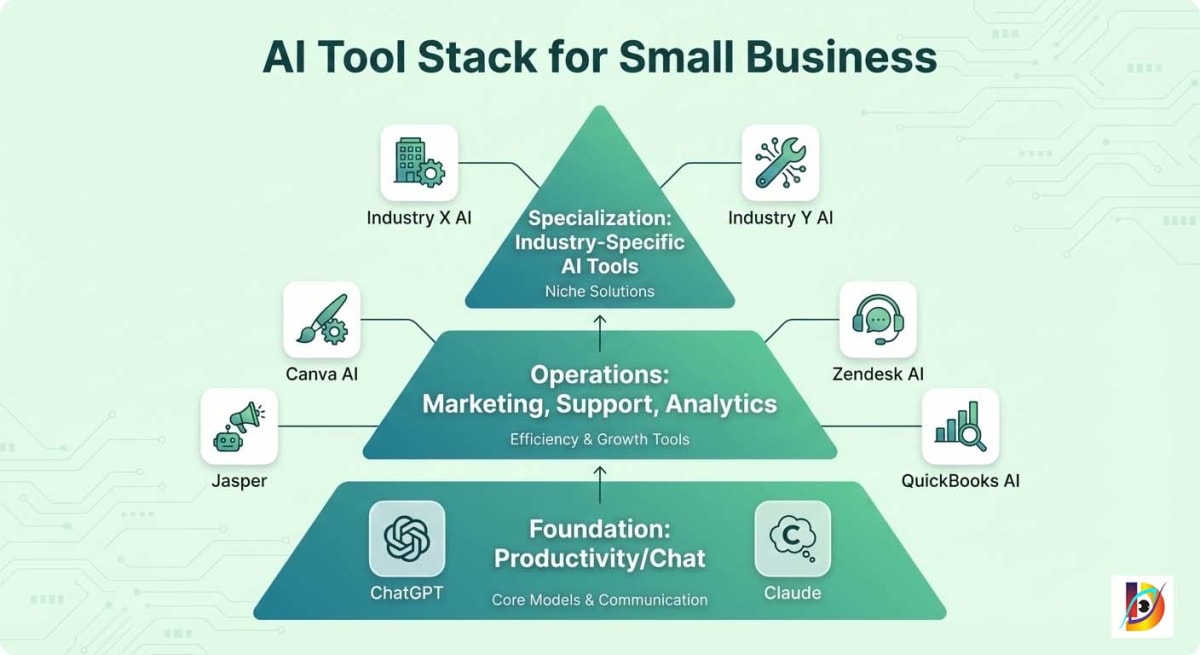
AI is no longer expensive. Small businesses can now use AI easily.
Customer Support
AI chatbots answer common questions 24/7.
Marketing Help
AI helps create:
Emails
Ads
Social media posts
Saving Time
AI automates tasks like:
Data entry
Invoices
Scheduling
This helps small teams grow faster.
Why AI Is Important in 2026
Three big reasons why AI is growing fast:
High costs – AI helps save money
Lack of workers – AI supports human work
Customer demand – People want fast and personal service
Using AI is no longer optional. It is necessary.
Final Thought
AI is not taking jobs from industries. It is changing how work is done.
Companies that use AI wisely will:
Work faster
Save money
Grow stronger
Companies that ignore AI may fall behind.
If you want to learn simple and useful AI tools for daily work, platforms like Distrya help people use AI in real life — not just theory.
Frequently Asked Questions About Artificial Intelligence in 2026
How is artificial intelligence changing industries today?
Artificial intelligence is changing industries by automating routine tasks, improving accuracy, and analyzing large datasets faster than humans. Businesses use AI to predict failures, detect fraud, personalize customer experiences, and optimize operations across manufacturing, healthcare, finance, education, and retail.
Will artificial intelligence replace human jobs?
Artificial intelligence is not replacing all human jobs, but it is changing how work is done. AI takes over repetitive and time-consuming tasks, allowing people to focus on creative, strategic, and decision-based work. Many jobs are evolving rather than disappearing, and new roles are being created around AI systems.
Is artificial intelligence only for large companies?
No, artificial intelligence is no longer limited to large companies. In 2026, small businesses can use affordable AI tools for customer support, marketing, content creation, data analysis, and automation. Many AI platforms require little technical knowledge and can be used immediately.
Which industries benefit the most from artificial intelligence?
Industries that benefit the most from artificial intelligence include manufacturing, healthcare, finance, retail, education, and logistics. These sectors use AI to reduce costs, improve efficiency, enhance security, and deliver better customer and user experiences.
What skills are important in the AI era?
Important skills in the AI era include data literacy, critical thinking, problem-solving, digital skills, and the ability to work with AI tools. Understanding how to use AI responsibly and interpret its results is becoming more valuable than deep technical knowledge alone.
Written by Distrya — a platform focused on practical AI tools for real-world businesses and creators.