US Plans Major Robotics Push — And It Won't Be Just Tesla That Wins Big
America is preparing for its largest industrial automation shift in decades — and the race to build the workforce of the future is suddenly wide open.
🌎 The Strategic Shift: America's Robotics Renaissance
The United States is quietly moving toward one of its most ambitious industrial policy shifts in decades. Recent signals out of Washington — from Commerce Department meetings to draft policy frameworks — suggest a formal national robotics initiative could land in 2026.
The goals are clear:
Rebuild domestic manufacturing
Reduce reliance on overseas labor & supply chains
Accelerate adoption of robotics + "physical AI"
Bring high-tech production back on US soil
This isn't just about robots replacing workers. It's about reshaping the entire backbone of American industry.

🚫 The Myth Debunked: 'US Robotics Push = Tesla Wins'
Social media has turned this news into a Tesla rallying cry, but the real landscape is far more competitive — and far more complicated.
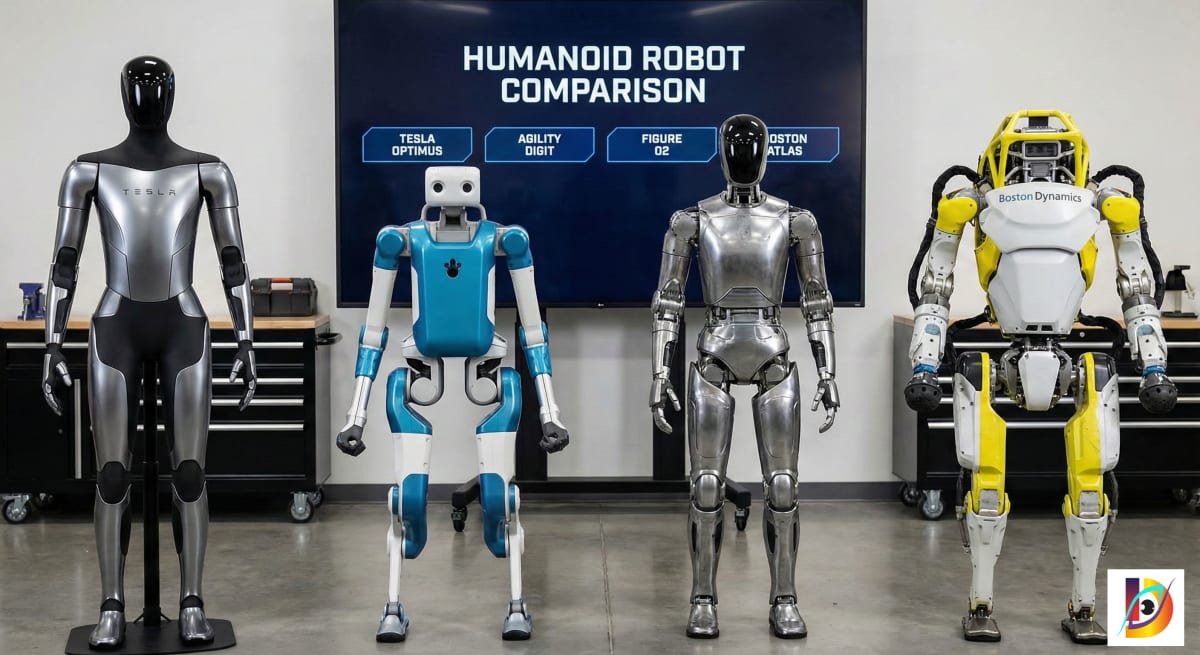
Tesla Isn't the Only (Or Even the First) Humanoid in Deployment
Tesla's Optimus is impressive, but:
It has no large-scale commercial deployments yet
Reliability data is undisclosed
Many demonstrations still require controlled environments
Meanwhile, the rest of the US robotics ecosystem is already operating in live industrial settings:
Company | Role | Deployment Status & Differentiator |
|---|---|---|
Agility Robotics | The Quiet Workhorse | First in deployment: Digit is already working in live commercial environments with GXO, moving 100,000+ totes in a real warehouse. Scale-ready: RoboFab facility can produce up to 10,000 units/year. |
Figure AI | The Industrial Contender | Proven reliability: Concluded 11-month pilot at BMW Spartanburg, operating 10-hour shifts with >99% placement reliability. Real volume: Handled 90,000+ parts for 30,000+ vehicles. Scalable: "BotQ" facility designed for 12,000 humanoids annually. |
Boston Dynamics | The Heavy-Duty Veteran | Legacy advantage: Backed by Hyundai, rolling out new electric Atlas. Industrial testing: Advanced manipulation in real factory settings. Strongest track record in mobility and robustness. |
→ Critical insight: If the US government backs robotics, these companies will absorb the benefits right alongside Tesla — and in some sectors, faster.
⚙️ The Industrial Reality: Most Factories Can't Use Humanoids Yet
"The bottleneck isn't the robots — it's America's factories. Retrofitting the old is harder than building the new."
The "Faraday Cage" Problem
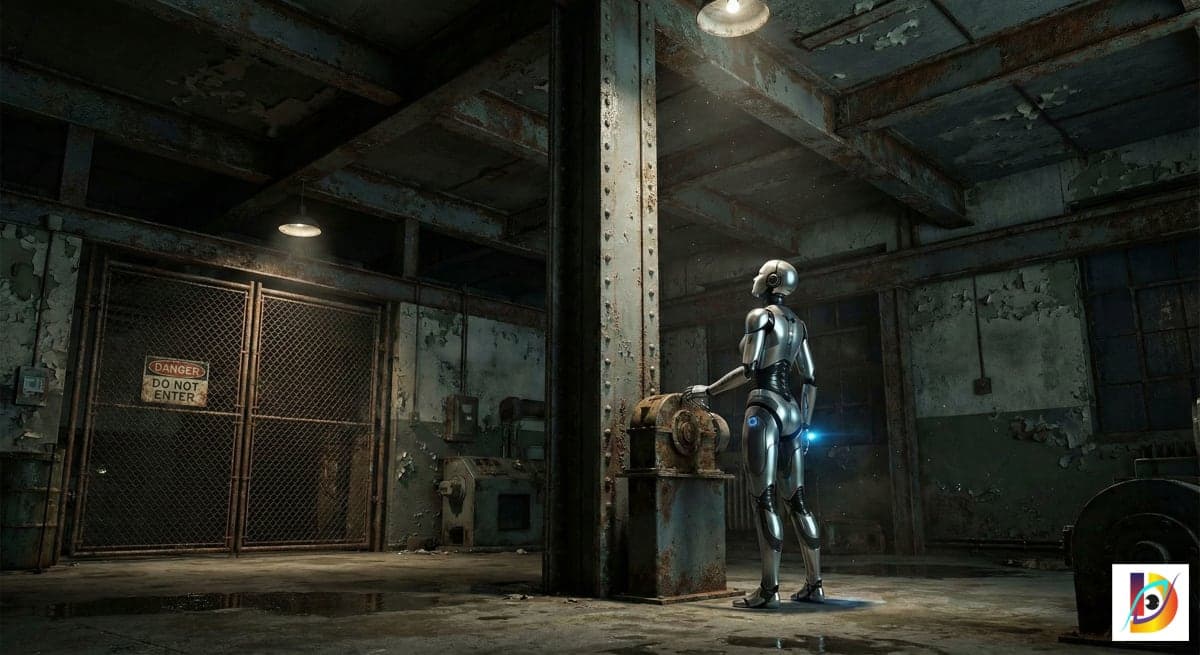
No Signal, No Robot: Modern humanoids rely on cloud updates and fleet management software. However, older factories (built of steel and reinforced concrete) often block 5G and Wi-Fi signals entirely.
The Hidden Cost: Retrofitting a 1950s plant with industrial-grade network infrastructure can sometimes cost more than the robots themselves.
Brownfield Factories = The Real Challenge
Most US factories today:
Were built 30–80 years ago
Cannot easily integrate humanoids
Require costly redesigns of workflow, safety systems, and environment
You cannot simply drop a humanoid into a facility designed for humans and forklifts.
Reliability Requirements Are Brutal
For a robot to be viable in mass deployment:
99.9% uptime is the minimum
Robots must operate for months with minimal intervention
Current humanoids — including Tesla's — still need finely controlled conditions for many tasks
A viral demo ≠ industrial readiness.
Think of humanoids today like early personal computers in the 1980s — limited, clunky, and expensive. But once industries learned how to integrate them, they became unavoidable infrastructure.

🏛️ How the US Will Actually Support Robotics (This Matters)
Most online hype skips the most important question: What does the government actually plan to do?
Different policy mechanisms create totally different winners:
Policy Lever | Primary Beneficiaries | Why It Matters |
|---|---|---|
1. Tax Credits for Adoption | Agility, Figure, Boston Dynamics, traditional robotics | Directly lowers cost for manufacturers to deploy |
2. Direct Manufacturing Grants | Companies building robot factories (RoboFab, BotQ) | Accelerates US production capacity |
3. Tariffs on Foreign Robots | US players vs. Japan, Korea, and China | Creates protective trade barrier |
4. Securing the "Strategic Stack" | Actuator, magnet, battery manufacturers | Decouples from foreign supply chains |
5. National Training + Safety Standards | Large manufacturers, integrators | Enables mass adoption across industries |
Until we know which mechanisms pass, predicting a single "winner" is fantasy.
📌 Prediction: By 2028, new US manufacturing plants using mixed automation (robotic arms + mobile robots + humanoids) will outnumber fully human-operated workflows — not because of hype, but because of reliability and labor economics.
📈 The Real Early Winners: The Robotics Supply Chain
Government pushes rarely benefit the final consumer product first. Instead, early beneficiaries tend to be the "picks and shovels" of the robotics gold rush:
Actuator manufacturers (joints, torque motors) – The muscles of every robot
Advanced sensor companies (LiDAR, 3D vision, tactile sensors) – The eyes and nerves
Edge compute providers (NVIDIA, AMD, custom robotics chips) – The brains
AI model suppliers ("large behavior models" for robots) – The intelligence
Battery & power-system manufacturers – The energy source
This is where the real money flows first – building the foundation before the robots themselves scale.
🧠 The Big Picture: A Multi-Winner Decade, Not a Single-Winner Race
The US robotics renaissance won't crown one champion. Instead, America's push is shaping a complete robotics ecosystem, where:
Tesla brings scale + AI prowess
Agility brings proven commercial deployments
Figure brings industrial humanoid specialization
Boston Dynamics brings heavy-duty reliability and mobility
Suppliers bring the foundational hardware
Factories decide which tool fits which job
The US isn't choosing a robot company — it's choosing a robotics future.
The winner won't be Tesla alone, but the entire American industrial ecosystem that learns to build, deploy, and integrate the right tools for the right jobs.