
From Gut Feel to God Mode: Why Your Spreadsheet Isn't Enough Anymore
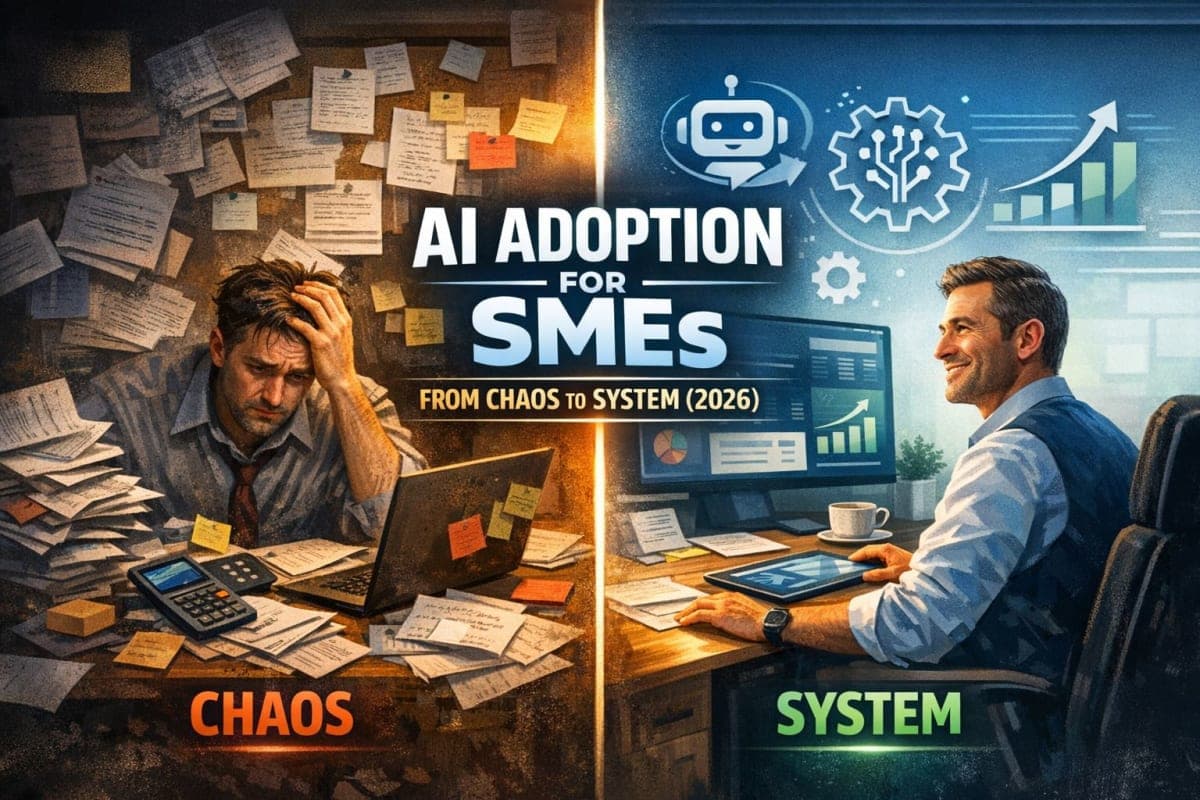
Let me tell you about my friend Sarah, who runs a small e-commerce store. For years, she swore by her "gut feeling" for what to stock. Last winter, her gut told her to order a thousand units of a new, artisanal scarf. She's now the proud owner of 743 scarves and a very valuable lesson. In 2025, guessing is a luxury no business can afford.
That sinking feeling of a bad decision? It’s preventable. In today's world, the hidden cost isn't just the scarves you can't sell; it's the marketing budget you wasted, the customers you disappointed, and the opportunities you missed while you were looking the wrong way. If you're not using your data, you're not just falling behind—you're driving with a fogged-up windshield.
If your eyes glaze over at terms like "data warehousing," take a deep breath. You're in the right place. This isn't a technical manual. This is your plain-English roadmap to understanding how Business Intelligence (BI) can stop the guesswork and start creating real, measurable results for your company.
🔑 Your 60-Second Cheat Sheet
BI in a Nutshell: It’s the process of taking the messy, scattered data your business already creates and turning it into a clear, actionable story.
The Big Payoff: Make faster, smarter decisions that save money and make customers happier.
How It Works (The Abridged Version): Grab data → clean it up → ask it questions → see the answers in pretty charts → make a powerful move.
The Tools: Platforms like Power BI and Tableau do the heavy lifting, so you don't need to be a programmer.
The Golden Rule: BI is your telescope, helping you see what to do next. Data analytics is your microscope, figuring out why something happened in the past.
So, what is Business Intelligence, really?
It’s your company's built-in navigation system. It takes the raw GPS signals of your data—sales, website clicks, customer complaints—and plots them on a map anyone can follow, so you stop getting lost and start finding shortcuts.
What Is Business Intelligence (BI)? No, It's Not Just Fancy Charts.
The "Aha!" Moment
Let's cut through the jargon. Business Intelligence (BI) is simply a set of tools and processes that help you understand what’s actually happening in your business. It connects the dots between different departments so you can see the whole picture, not just disconnected fragments.
I like to think of it as the business equivalent of getting glasses for the first time. You didn't realize how blurry everything was until you saw things in sharp focus. BI gives your business 20/20 vision.

BI in the Wild: From Starbucks to Your Local Cafe
Forget the abstract theory. Let's talk about how The Home Depot uses BI. During hurricane season, their system doesn't just track sales; it correlates real-time weather data with historical purchase patterns. This allows them to pre-emptively ship generators, flashlights, and plywood to stores in the path of a storm. They're not just reacting; they're predicting need and saving the day (and making the sale).
Here’s how this translates to a smaller business:
The Problem: A local chain of three coffee shops notices a slow, confusing drop in afternoon sales.
The "Old Way": The manager might blame the barista or run a generic "afternoon special" coupon.
The BI Way: They connect their point-of-sale system to a simple BI dashboard. Within an hour, they spot the real pattern: sales of hot coffee plummet after 2 PM, but iced tea and cold brew sales hold steady. The data reveals a temperature problem, not a service one.
The Action: They launch a "Beat the Heat" iced drink promotion from 2-4 PM and adjust their afternoon brewing schedule to reduce waste.
The Result: Afternoon revenue increases by 15% in two weeks, and they waste less coffee. That's the power of a small, targeted insight.

BI vs. Data Analytics: The Tango of Questions and Answers
This is where most people get tangled up. Let's untangle it with a simple analogy.
Data Analytics: The Crime Scene Investigator
Data Analytics is all about the "why." It's a deep, forensic dive into the past. Analysts are the detectives sifting through evidence, running tests, and building a case.
Focus: Investigation and root cause analysis.
Key Question: "We lost 500 customers last quarter. Let's analyze the support tickets, usage data, and cancellation surveys to find out exactly why."
Business Intelligence: The Police Chief
BI is all about the "what now?" It takes the detective's report and uses it to decide where to allocate officers, how to prevent future crime, and where the city's real dangers are.
Focus: Strategy, monitoring, and action.
Key Question: "The data shows our new users are confused by the checkout process. Let's change the onboarding flow next week and track the cancellation rate on this dashboard to see if it works."
The bottom line: Data analytics hands you the diagnosis. BI is the treatment plan. You need both to get healthy.
How BI Works: The 5-Step Journey from Chaos to Clarity
Think of building a BI insight like baking a cake. You can't just throw flour, eggs, and sugar in the oven and hope for the best.
Step 1: Data Sourcing (The Grocery Run)
You gotta get the ingredients. A BI system pulls data from everywhere—your sales software (like Shopify), your marketing platforms (like Google Ads), even your customer support chats. This is the "everything but the kitchen sink" phase.
Step 2: Data Warehousing (The Pantry & Fridge)
You can't cook in a messy kitchen. A data warehouse is your giant, walk-in pantry where all this data is cleaned, organized, and shelved logically. Sales data here, customer data there. This is the most unglamorous but absolutely critical step.
Step 3: Analysis & Reporting (The Actual Baking)
Now we cook! Here, you query the data to find patterns. "What's our best-selling product this month?" "Which marketing channel brings in the most valuable customers?" This is where the raw ingredients start to become something edible.
Step 4: Visualization (The Icing and Decorating)
Nobody wants to eat a plain, lumpy cake. This step is where you turn the results into beautiful, easy-to-read dashboards with charts and graphs. This is what makes the insights accessible to everyone, from the intern to the CEO. It's the "storytelling" phase.
Step 5: Decision Making (Serving and Eating)
The final, most important step. You use the beautiful, clear dashboard to make a call. Re-allocate the budget. Change a process. Launch a new product. This is where you finally taste the payoff.
Why BI Isn't Optional in 2025: The Hard Benefits
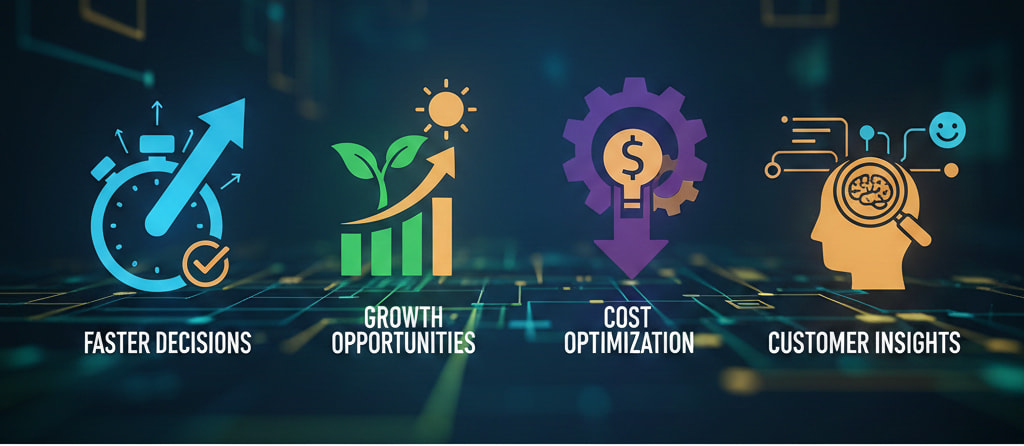
1. Speed Kills (Your Competition)
A marketing director at a previous company once told me she spent four days each month just manually building reports in Excel. A BI tool automated that, giving her and her team those four days back to actually do marketing. In a fast-moving market, the speed to insight is a competitive weapon.
2. Find Money You're Leaving on the Table
BI isn't just defensive; it's your best offensive player. It can identify your most profitable customer segments (your "whales") and show you what else they want to buy. A 2024 Gartner study highlighted that organizations using predictive BI were 2.7x more likely to have significantly outperformed their competitors. The trend for 2025 is "Generative BI," where you can literally ask, "What new product should we build?" and get a data-backed concept.
3. Stop the Bleeding (of Cash)
Inefficiency is a silent tax on your business. BI shines a light on it. It can show you that a specific shipping route is consistently delayed or that a particular software subscription is barely being used. One of our clients, a mid-sized manufacturer, used a BI dashboard to track machine downtime and identified a single faulty component that was costing them $18,000 a month in lost productivity. They fixed it in a week.
4. Make Your Customers Feel Like Royalty
This is the big one. BI lets you move from segmenting customers by basic demographics to understanding their actual behavior. You can see that customers who bought X also need Y, and then you can make them a relevant offer before they even ask. That's not marketing; that's magic. And it builds fierce loyalty.
Here are Top AI Tools Making Business Smarter in 2025
My advice? Don't get paralyzed by choice. Pick one—I'd suggest starting with the free version of Power BI or Looker Studio—and just play. Import a CSV of your own website traffic or sales data and click buttons. The best way to learn is by doing.
Your Mission, Should You Choose to Accept It
We started with a story about 743 unsold scarves and end with a choice.
You can continue to operate on instinct, hoping your gut feeling is right, and occasionally getting stuck with a warehouse of scarves.
Or, you can start treating your company's data like the superpower it is.
Your homework isn't to overhaul your entire company. It's to take one small step:
Block 30 minutes in your calendar this week.
Go to the website for Power BI, Tableau, or Looker Studio.
Watch one single "getting started" video and build one single chart.
That's it. That's the spark. Confidence with data doesn't come from reading one article; it comes from that first "aha!" moment when you click a filter and see a chart change in real-time.
Stop guessing. Start knowing.
📚 Jargon-Buster Glossary
Term | What It Actually Means |
|---|---|
KPI (Key Performance Indicator) | The handful of numbers that truly tell you if your business is healthy (e.g., Customer Churn Rate, Monthly Recurring Revenue). Your business's vital signs. |
Data Warehouse | The central, organized "brain" for all your company's historical data. It's the single source of truth. |
Dashboard | A single screen that shows your most important KPIs as charts and graphs. Your business's command center. |
Predictive Analytics | Using math and AI to make an educated guess about what will happen next (e.g., "Which customers are most likely to leave?"). |
Insights | The "aha!" moments hidden in your data. The conclusions that lead you to a smarter decision. |