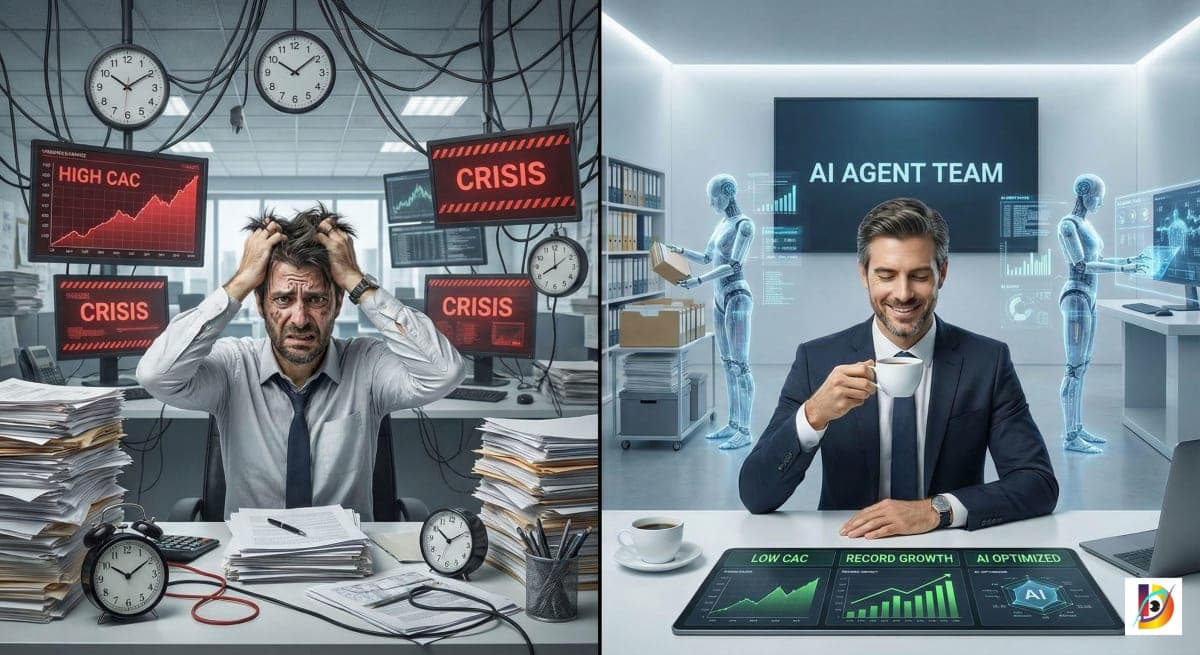
Hard work used to be the only way to grow. In 2026, smart systems are the new hustle.
The Emotional Handshake
Do you feel it? That creeping suspicion that the "old playbook" just isn't working anymore?
You’re not crazy. The strategies that built unicorns in 2023—mass cold outreach, generic content marketing, and dumping cash into Facebook ads—are rapidly losing their edge. The noise is louder, attention spans are shorter, and customer acquisition costs are climbing a vertical wall.
It’s exhausting trying to scream louder than everyone else.
But here is the good news: While the masses are fighting over scraps in the old channels, a quiet revolution is happening elsewhere. Smart founders are leveraging "Agentic AI," weaponizing community, and hacking distribution in ways their competitors haven't even noticed yet.
This article isn't about "working harder." It's about leverage. By the end of this read, you will have a toolkit of 2026-native strategies designed to cut through the noise, lower your CAC, and build a growth engine that runs on autopilot.
Let’s build your unfair advantage.
Hack #1: The "Integration as Distribution" Play (The Trojan Horse)
Stop trying to drag users to your "destination island" website. Instead, build bridges to where they already live.
In 2026, the fastest-growing startups aren't just building standalone SaaS apps; they are building micro-integrations inside platforms like Slack, Notion, Raycast, or Chrome.
The Strategy: Identify the platform your ideal customer spends 6+ hours a day in. Build a lightweight, free version of your tool that lives natively there.
The Benefit: You borrow the trust and traffic of a billion-dollar ecosystem.
Real-World Application:
Case Study: Think of how Grammarly won. They didn't force you to write in their app; they built a browser extension that followed you everywhere. Your 2026 Play: If you are building a Project Management tool, don't just build a dashboard. Build a "One-Click Task" Chrome extension that lets users turn any website text into a task instantly.
Why It Works:
Stat: "App ecosystem integrations can lower Customer Acquisition Cost (CAC) by up to 40% compared to direct ad spend, as users discover tools naturally within their existing workflows." [Source: SaaS Ecosystem Report trends]
Hook them with a utility. Keep them with a platform.
Hack #2: Pivot to "Answer Engine Optimization" (AEO)
SEO is no longer just about ten blue links. It’s about being the cited source for AI.
With the rise of SearchGPT, Perplexity, and Google's AI Overviews, users aren't clicking websites; they are reading AI summaries. If your content isn't structured for machines to "read and respect," you are invisible.
The Shift: Move from "Keyword Stuffing" to "Entity Authority."
The AEO Checklist:
Structure Data: Use heavy Schema markup so AI clearly understands what your data represents.
The "Snippet Bait" Intro: Start every blog section with a concise, direct answer to the question (40-60 words).
Proprietary Data: AI models crave new information. Publish original studies. AI cites primary sources, not copycats.
Why It Works:
Stat: "Zero-click searches (where the answer is provided on the results page) are projected to account for over 60% of all queries by late 2026." [Projected Search Trend Analysis]
Hack #3: Deploy "Agentic" Outbound Sales
Cold email isn't dead, but "human-written templates" are. The new frontier is Agentic AI—autonomous agents that research, engage, and nurture leads without you lifting a finger.
We aren't talking about "Mail Merge." We are talking about AI agents that:
Visit a prospect's LinkedIn and recent news.
Draft a 100% unique message referencing a specific recent event.
Wait for a reply, and even handle the initial scheduling logistics.
Comparison: The Old Way vs. The 2026 Way
Feature
Traditional Outbound
Agentic AI Outbound
Personalization
Name & Company Name only
Deep research (News, posts, tech stack)
Volume
Limited by human fatigue
Unlimited scale, 24/7 operation
Response Rate
~1%
5-12% (Due to hyper-relevance)
Mini-Case:
Imagine an agency owner, "Sarah." Instead of hiring 3 SDRs, she deploys 5 AI Agents. Each agent is assigned a vertical. They scan news for "Series A Funding Announcements," find the CTO on LinkedIn, and send a bespoke connection request referencing the funding. Sarah wakes up to 4 booked demos daily.
Hack #4: Community-Led Growth (CLG) is the New Moat
Ads can be copied. Pricing can be undercut. Community cannot be stolen.
In a world of AI-generated content, people crave human connection and validation more than ever. The most resilient startups in 2026 are building "Islands of Trust."
The Strategy: Don't build an audience; build a Peer Group.
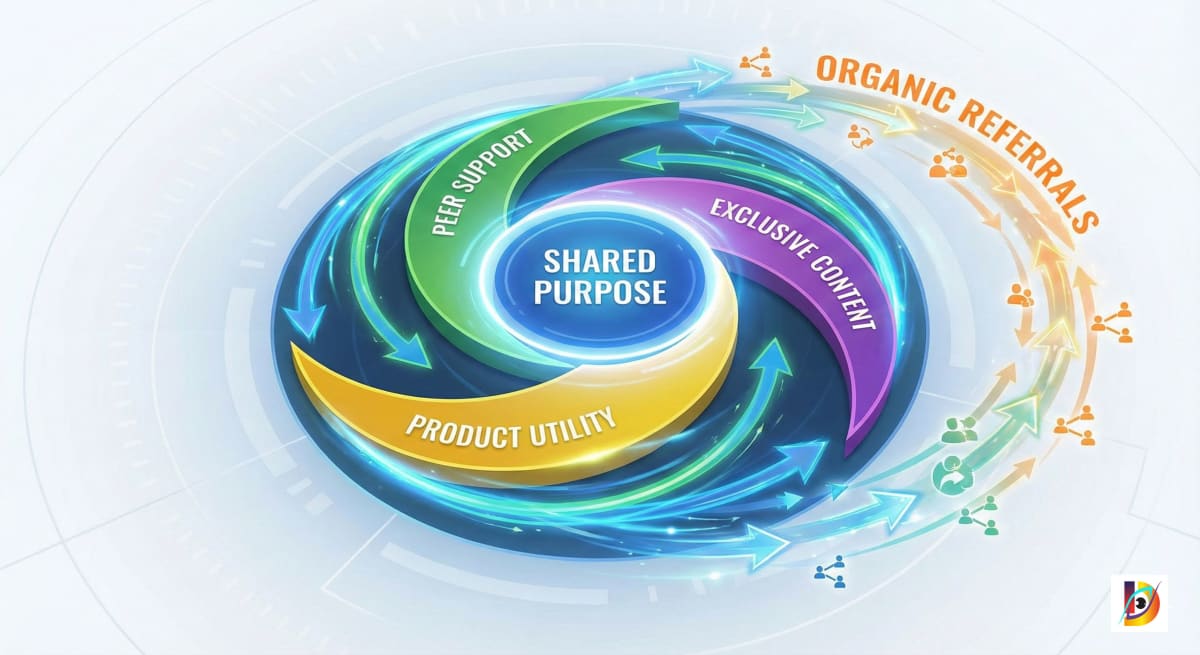
The CLG Flywheel:
Attract: User joins for the network (e.g., "The CFO Lunch Club").
Engage: User asks questions and gets peer support.
Trust: You (the founder) provide value without pitching.
Convert: Product is introduced naturally as the solution to community pains.
Why It Works:
Stat: "Customers acquired through community channels typically have a 2x higher Lifetime Value (LTV) than those acquired via paid ads." [Community-Led Growth Benchmarks]
When your customers talk to each other, your marketing runs itself.
Hack #5: Hyper-Personalized Video at Scale
Text is easy to ignore. A video of a human saying your name is not.
Tools like HeyGen and Tavus have matured to the point where you can record one video and have AI lip-sync and dub personalized variables (Name, Company, Specific Pain Point) for thousands of recipients.
The Implementation:
Don't just sell; Onboard.
Scenario: A new user signs up. 5 minutes later, they get a video from YOU.
Script: "Hey [Name], saw you joined from [Company]. Since you're in [Industry], I recommend checking out feature X first..."
Why It Works:
Stat: "Personalized video in onboarding flows can increase activation rates by over 70% compared to standard text emails." [Video Marketing Conversion Data]
Conclusion
Execution beats awareness.
The startup landscape of 2026 isn't for the faint of heart, but it is incredibly rewarding for the adaptable.
This week, choose one growth lever. Ship the smallest usable version of it.
If you have devs, scope an Integration.
If you have sales, pilot an AI Agent.
If you have content, audit for AEO.
Momentum compounds. The startups that win 2026 aren’t the loudest — they’re the earliest to adapt.